

How Leaders Gain Credibility: The Power of Self-Awareness in Executive Leadership
In leadership, credibility is the foundational currency. As noted in the leadership classic The Leadership Challenge:
“Credibility is the foundation of leadership. Above all else, constituents must be able to believe in their leaders. They must believe that their leaders’ word can be trusted and that they have the knowledge and skill to lead.”
To lead effectively, being honest is only half the equation—your team must perceive you as honest and transparent. When team members ask critical strategic questions—Why are we prioritizing this metric over another? Why was a key initiative restructured?—they are actively evaluating the clarity and authenticity behind your direction.
Building that level of perceived honesty begins internally: you must first cultivate deep self-awareness to articulate your vision, values, and rationale clearly.
Here are three strategic practices leaders can integrate into their routines, along with real-world scenarios to translate self-awareness into daily leadership credibility:
1. Intentionally Disconnect to Define Strategic Rationale
Modern executive environments present constant digital noise, leaving little room for high-level strategic reflection. Periodically stepping away from day-to-day operations—whether through a dedicated quarterly retreat, unstructured downtime, or a tech-free weekend—creates space to process complex challenges, clarify personal leadership values, and align long-term priorities.
Real-World Scenario: Imagine leading a company pivot toward a new service line. If you rush the announcement between back-to-back meetings, team members may perceive the pivot as a erratic reaction to market pressure.
Practical Application: Use disconnected focus time to complete a "Rationale Audit" before major announcements. Ask yourself:
What core value or long-term objective drives this decision?
What trade-offs are we accepting, and why are they worth it?
How does this protect or enhance our team's mission?
Outcome: When presenting to your team, you can clearly articulate the why behind the change, pre-emptively addressing concerns and building strategic confidence.
2. Engage in Peer Accountability Groups to Uncover Blind Spots
Self-awareness is rarely achieved in isolation. Joining a structured mastermind, executive peer group, or accountability network exposes blind spots and tests assumptions. Honest feedback from trusted peers challenges leaders to refine their strengths, acknowledge areas for growth, and remain accountable to their commitments.
Real-World Scenario: A CEO notices high turnover during project handoffs. Internally, the leader attributes it to team burnout. However, an external peer group points out a potential blind spot: the leader’s habit of stepping in late with major directional changes.
Practical Application: Form or join a cadence-based executive peer review. Bring actual operational challenges and ask your peers for unfiltered feedback:
"Where might my communication be ambiguous here?"
"Am I solving the root problem or just reacting to the symptom?"
Outcome: Recognizing your operational blind spots allows you to publicly acknowledge process flaws and adjust your approach, demonstrating humility and high emotional intelligence.
3. Establish a Daily Practice of Reflection for Consistent Composure
Sustained performance requires daily grounding. Dedicating time every morning to reflection, mindfulness, or quiet focus prevents reactive decision-making and aligns daily actions with core principles. Leaders who practice daily reflection navigate high-stress decisions with greater composure and strategic intent.
Real-World Scenario: During a high-stakes client escalation, a project manager challenges your team's capability in front of stakeholders. A reactive leader might become defensive or pass blame down the chain.
Practical Application: Implement a 5-Minute Morning & Evening Reflection Routine:
Morning Grounding: What is my top priority today, and how do I want my leadership tone to reflect our values?
Evening Audit: Where did I react defensively today, and what triggered that response?
Outcome: By regularly auditing your emotional responses, you build the composure required to de-escalate crises calmly, protecting team morale and solidifying client trust.
Key Takeaways for Executive Leaders
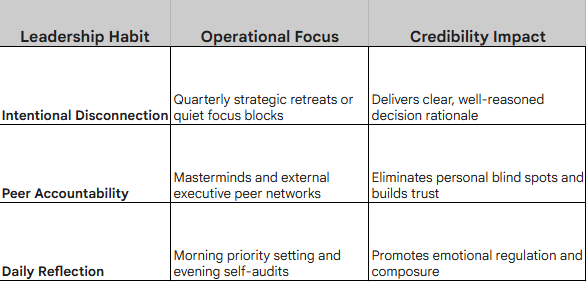
Strengthening Leadership Capacity Across Your Organization
Credibility is not an inherent trait; it is a discipline built through intentional personal development. When leaders understand their core motivations and values, they communicate with clarity, foster organizational trust, and drive lasting results.
Looking to enhance leadership development or executive team alignment within your organization? Contact Mustful Strategic Consulting to explore custom leadership development strategies and executive coaching.